Wednesday, 18 May 2016

Holy shrimp! This scampi happening!

"What I didn't know about fishing, fisheries and sustainable seafood" by Sea Champion Mary Sears

Cod and chips with mushy peas please," spoke the customer in front of me in the queue at the fish and chips takeaway, all the crispy golden batter coating the cod making my mouth water as I waited my turn in the queue on a Friday night. But just how much cod can one place really supply sustainably? For the past 4 months I have been an assistant online research volunteer for the Marine Conservation Society, looking into sustainable seafood and the multiple supermarkets, restaurants and fishmongers that sell seafood on their menus. Using the new 'Good-Fish guide' app on my smart phone, I wanted to write this blog, summarising my findings.


Before my interest in fisheries and sustainability evolved, I would head to my local supermarket or fishmonger without a thought in mind about whether to ask where the trout or snapper I was buying was sourced from, or how it was caught, because when you're uneducated, who cares? But, whilst in my first year of doing an Integrated Wildlife Conservation degree at UWE, I have widened my understanding and knowledge on the importance of sustainability and protecting ecosystems, especially our wonderful marine ecosystem.  The last FAO report (2014) indicated that in 2011 in total 28.8% of global assessed fish stocked were overfished; 61.3% are fully fished; and just 9.9% are under-fished (i.e. there is room for expansion), proving WHY it is so important to take seafood sustainability seriously.

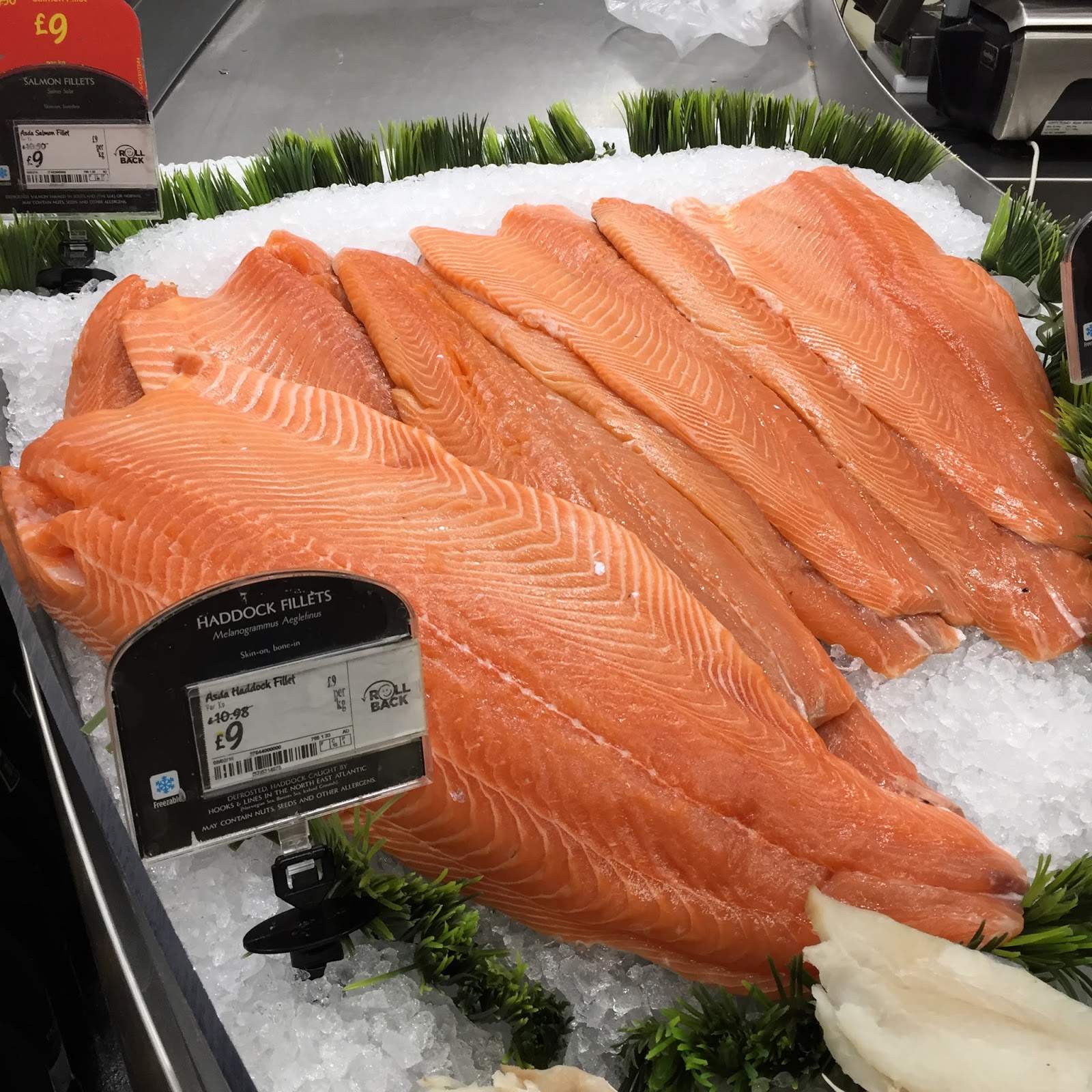
One of my aims whilst researching different supermarkets and fishmongers was to test the knowledge of the workers preparing the fish, to see if they themselves knew whether the fish they're selling is sustainably sourced and if not, why not? Using the new MCS Good Fish Guide app, the first supermarket I visited was an ASDA store. Whilst nervous to talk to the people there at first, I realised I wanted to gather as much information as I could get about how seafood derived from the sea, gets to ASDA's ice counters! I spoke directly to the manager of the fish counter, who was happy for me to take photos of his fish on ice display and informed me that all the fish they supply is MSC (Marine Stewardship Council) certified - fantastic! However, there was no Marine Stewardship Council (MSC) labelling in evidence, which seemed a little suspicious. Also, not all the fish they had on show, such as river cobbler and rainbow trout, were labelled with the method of which they were captured or whether they were farmed or not. When I asked the manager (who was extremely friendly) he said that ASDA stores were currently updating all their fish labels so that customers know exactly where and how their fish is being sourced. We’ll have to wait, see and hope that it actually happens as ASDA scored poorly in the recent MSC league table for certified seafood (https://www.msc.org/newsroom/news/sainsburys-no-1-uk-retailer-for-sustainable-seafood-lidl-nets-third-place/?searchterm=sea).

Previous to this research, I had watched Channel 4's 'Hughs Fish Fight' to learn about how he has been and still is, trying to change EU policies about fish stocks and fishing technology world wide, especially in LEDC’s such as the Philippines. In this fishing nation, Hugh has helped educate hundreds of fish farmers on how to be more sustainable.

Several of the fishmongers I visited had advertised, 'SUPPORTERS OF HUGH'S FISH FIGHT' on their windows, which I thought was great as SO many people who watch Channel 4 will have heard of the series. The fish manager in ASDA described to me how customers just want 'cheap fish' to feed their families at home, but they love knowing that by buying the sustainable fish ASDA supply (although inexpensive) they are supporting sustainable fisheries through their custom.   Each year, billions of unwanted fish and other animals - like dolphins, marine turtles, seabirds, sharks, and corals - die due to inefficient, illegal, and destructive fishing practices.

Capture methods clearly labelled on some of the fish were 'hook and line method' and 'pots and traps' which are listed as low impact and selective methods by the MCS, hoorah!

Handing out Pocket Good Fish Guides to friends and family
Whilst looking at different species in stores, I would have the 'Good-Fish Guide' app open on my phone and search the app for the species I was looking at in store, for example, European Lobster. I’d then compare the information on the labels in store with the information provided by the app. The app gives you a 'sustainability rating' as well as some background information on the species to help you understand any effects on the environment that the sourcing of a particular species has had. It was SO easy to do and I've recommended the app to a load of people I know who consume fish weekly, to help them make more informed decisions!

Whilst out and about visiting multiple supermarkets and fishmongers I learnt a lot about 'fish to avoid' and 'fish to eat'. Seafood is sold widely all over the world, but by using this app and making sure I read the labels of any seafood I buy, I now know how to make more sustainable decisions.

I work in a restaurant which sells cod, haddock, scampi and salmon, but on the menu there is NO information about where the fish is sourced or whether it is sustainable to consume or not; I personally will speak to my manager about making changes to this. Everybody has their own favourite restaurant and favourite place to eat, but if more restaurants and takeaways provided more information on the sustainability of the fish on their menu, it would make customers feel much happier about paying for a good, sustainable source that isn't harming the environment!


Tuesday, 19 April 2016

Bristol Sea Champs have been helping stop plastic getting from "City to Sea"!


Sea Champions have been working on a fantastic local partnership project in Bristol and here Amy and Kay describe what they’ve been up to and what’s been achieved so far.
Amy writes:
“With Bristol winning the European Green Capital award last year, it was an exciting time for conservation. I was lucky enough to get involved along with Sea Champions Kay and Neil, with the City to the Sea group to represent MCS. City to Sea was just getting started and their aim was to reduce the amount of plastic litter from Bristol ending up in the Severn Estuary and floating out to sea. The group was made up of a collaboration of practitioners, scientists, local organisations, marine biologists, artists and campaigners working on ways of phasing out single-use plastics to create a model that can be shared with other coastal and river based cities. The first few meetings were opportunities for the members to share their experience and talk about different ideas and decide where we should start. 

The Bristol Whales art installation produced to celebrate Bristol's year as European Green Captial for 2015 


This is Kay as in the MCS Cod costume at the group's launch last summer, which was filmed for Made in Bristol TV (watch the video here).
Out of the potential issues raised, cotton bud sticks and MCS Beachwatch litter survey findings were talked about a lot and is something the group will campaign on in the future. The issue we decided to tackle first was single use drinks bottles, which formed a lot of the waste found on the Avon gorge river cleans. City to Sea started the Bristol Refill project in response to this problem,

The idea is really simple; all that the business needs to do is put a sticker in their window so that the public know that they can go in and get their water bottles filled up for free, helping to reduce the number of single use bottles bought and thrown away. The project now has over 170 businesses signed up across the city (exceeding our target of 120).

As a volunteer on the project, I’ve been out and about speaking to lots of businesses and had mostly positive responses; everyone has been keen to find easy ways to help reduce waste getting to the sea. If you are ever in Bristol, have a look at the Bristol Refill map for all the places that you can fill up your own water bottle.”

Sea Champion Kay tells us about the next stage of the City to Sea project:

“Thinking about how to grow the project, we started the new year in 2016 by attending a City to the Sea workshop. We looked at future ideas for new projects within the campaign to engage Bristol folk. It was great to see a range of people at the workshop, including young people and a former MCS Campaign Manager!
We were split into groups and each given a scenario and asked to come up with campaigning ideas.  The question that kept coming through was ‘how do you change peoples’ behaviour?’  We discussed how to get people into the habit of regularly carrying a water bottle, but then what happens if you run out of water?   Times that you had to buy a bottle of water, tended to be when you were travelling around on public transport, and there was nowhere to refill a bottle; also if you got caught out by being out longer than you thought. Some people proposed a message on bottled water, similar to those found on cigarettes, stating what happens to that plastic bottle when you throw it away. Somehow, we could not see the corporates liking that idea!

Things have also been happening on a political level, one of the founding members of City to the Sea and a Bristol Councillor took forward a motion that outlined constructive and step-by-step ways in which the City Council as a property owner, caterer, landlord and events licenser could play a key role in lowering the mount of SUP (Single-Use Plastics) Bristol wastes every year.


Here City to Sea Founder Natalie Fee addresses the Council meeting.
The motion included a strategy for seven key areas where Bristol City Council could make a difference, from ending the sales of plastic bottles in council buildings to working with festivals in the city to phase out all single use plastics. Although the motion was not selected to be heard due to time constraints this time, the campaign continues, with the motion coming back to the next council meeting in March. As Sea Champions and supporters of City to Sea, we will be writing to our local Councillors and MPs asking them to support the motion.
If you want to get your Council to introduce something similar in the city you live in, we can send you a copy of the motion that you could adapt and send to your local Councillors.

We’d be really keen to hear from other Sea Champions about measures they have been working on, or have seen succeed to reduce the use of plastic bottles and other SUPs in their areas. We can then propose those ideas to help to push ‘City to Sea’ even further forward."

Amy and Kay, Bristol Sea Champions

If you’d like to find out more about the City to Sea project then visit their site here. Or if you’d like to share your thought with Amy and Kay you can email them via our Sea Champions SW Manager Jules at  jules.agate@mcsuk.org.

Thursday, 18 February 2016

Have you got the bottle?


Marine litter is a problem, this we know. Our Beachwatch surveys are telling us that the amount of litter found on our beaches has more than doubled in the last twenty years. We also know that a staggering 14% of that litter in Scotland is made up of drinks containers. MCS is working in many ways to help reduce this, one of the most recent being our involvement with the Have You Got the Bottle campaign in Scotland. The aim of the campaign is to introduce a deposit return system for drinks packaging. Marvellous idea you say, we think so too. But the first obstacle to making it happen is getting it through parliament.

Catherine, our Scotland Conservation Officer went along to a meeting with the other partners in the campaign where they posed the question, how are we going to get Members of Scottish Parliament (MSPs) to pay attention and vote for it the deposit system? Luckily the Scottish MCS team and Sea Champions had a cunning plan that would raise awareness of the campaign and grab the MSPs’ attention. The plan? Instead of sending a standard written invitation to the parliamentary event they decided to put the invite on a plastic bottle that had been cleaned off of a local beach. Genius! Here’s how they did it…


It began with a beach clean. 129 MSPs to invite = 129 bottles. Sounds like a lot but sadly, they weren’t hard to find. Sea Champions Dawn and Chloe along with MCS colleague Dawn, MCS Trustee Leigh and some lovely volunteers from the Edinburgh Zoo helped collect over 200 bottles from Aberlady and Dalmeny beach.


Step 1 done, just a slight issue, where to put them?! Luckily Calum our Head of Conservation in Scotland kindly kept all the bottles in his shed before they were transported to Catherine’s spare room ready to be washed and labelled.

Next up, the label. Sea Champs Malin is pretty nifty with graphics and whizzed up a fab label to go on the bottles.


Then Sea Champs Kim and Eilidh spent a day cleaning and labelling all of our bottles ready to go to be sent out to the MSPs. (Check out the wee time lapse video they did here.)


To help drum up some more support our Volunteer Manager Matt with the help of Sea Champ Neil headed down to the beach to make a video showing just how big the problem is that went out on social media. Check it out here.

Back in the office MCS’s Dr Sue Kinsey was busy writing our official response to a call for evidence on the proposed deposit return system by Zero Waste Scotland.


Catherine went along to the meeting on the day and tells us a little about how it went:


"There was a full room and at least 9 MSP’s present along with a number of other staff who had been sent with their bottles in the MSP’s place due to other commitments. We even had one MSP ask to take part in the next beach clean in his constituency so a brilliant success! John from the Association to Protect Rural Scotland specifically thanked MCS for all our work in front of the whole attendance including Cabinet Secretary Richard Lochhead who absolutely loved the bottles!"


This really was a superb team effort between the MCS Scottish program staff and Sea Champions.


We’d like to say a HUGE thank you to our lovely volunteers who help made this happen.


To find out more about the Have You Got the Bottle campaign click here and why not follow Catherine on Twitter or Matt on Facebook to see what else our Scottish team and Sea Champions are up to.


Tuesday, 10 November 2015

MCS Lancashire Local Group runs a marine ID day

The Lancashire Local Group members

The Marine Conservation Society (MCS) has long understood the value of people coming together in their community to discuss shared interests and work together for a common cause. In fact, that’s a huge part of the reason why the Sea Champions programme came about. However, long before the Sea Champions programme MCS had established Local Groups and we’re delighted to say that three of these are still going strong today in Lancashire, South East England and Pembrokeshire.

Back in the summer, the Lancashire Local Group ran a marine ID day which they opened up to the local community. Kathy from the group has shared a little more about the day:

The event was hosted by RSPB Leighton Moss Nature Reserve, Silverdale, which has featured on the BBC's "Springwatch" series. We had a great mix of people come along including RSPB Leighton Moss volunteers, local divers, students undertaking environmental studies and others interested in wildlife and conservation.

A varied and interesting programme was put together which included topics such as Plants of the Foreshore and Algae/Seaweeds/Phytoplankton.

A few interesting questions were raised, someone asked if jellyfish sting each other and someone else was surprised that dead men's fingers are cnidaria and not sponges. The highlight of the day was a quiz of marine life photos which an RSPB member had kindly brought along to share with us.

We had some really positive feedback from the people who came along. The Local Group felt that this was a successful day, providing the opportunity to promote local and national marine conservation, enthusing those who attended with the richness and diversity of the marine life of Morecambe Bay and promoting the work of MCS and the Lancashire Local Group. We’re hoping to run more ID days in the future.

If you live in the Lancashire area and would like to get involved with the Local Group then be sure to have a look at their website for details or what's coming up and how to join. 


Tuesday, 20 October 2015

Manning the stand at the Plymouth Seafood Festival


For the fourth year running the Marine Conservation Society was invited to attend the Plymouth Seafood Festival. We love this event and it's such a brilliant opportunity to talk to the public about our work. Sea Champion Bethan was kind enough to lend us a hand on the stall and shares how she got on. 

Earlier in September this year, I was able to take part in the Plymouth Seafood Festival down on the Barbican on behalf of the Marine Conservation Society. I have been volunteering for MCS since the beginning of my Second Year (October 2013) providing an extra pair of hands and a voice to speak to the general public at large scale events as well as speaking at local schools about the importance of marine conservation.

The Seafood festival has become an annual event for the city as part of the wider Ocean City Festival running throughout September, showcasing the best Plymouth and the surrounding area has to offer for seafood, local produce and fantastic local brews! On the main stage, it offers cooking demonstrations for people to watch, as well as a variety of food stands to keep you going throughout the day. Set on the historic Barbican area of Plymouth, as you wander through the stands, you also get glimpses of the marina and the local fishing boats coming into harbour.

It was a fantastic day, speaking to members of the public about how important it is to keep our beaches clean, how to eat fish from well managed sustainable sources, as well as keeping the children entertained with Litter Pick Panic! It is always great to see and hear from the general public at these events, and it is incredible the amount of people we spoke to who really care about the marine environment and want to do more to protect one of our most beautiful habitats!

Wednesday, 23 September 2015

My first beach clean!


Phew! It’s been a busy few days for the Sea Champions team getting involved with the Great British Beach Clean all over the UK. We’re going to be sharing all about how we got on over on the Marine Conservation Society facebook page but while we unpack the litter pickers and tally up the survey sheets we thought you might enjoy this story from Sea Champion Kieran who tells us what it was like to run his first beach clean.

"This weekend was the Great British Beach Clean and all across the country, beach cleans have been taking place to raise awareness, collect data and do something about the huge problem that is marine litter. As part of this nationwide effort I was organising a beach clean at Bovisand in southern Devon. In the build up to the event I was a bit nervous. I had only recently became a Sea Champion, this was my first time organising a beach clean and I was a bit worried that something might go wrong, or that people wouldn't turn up!


Luckily on the Saturday the weather was incredible with clear skies and hot sun. Jules (the Sea Champions Volunteer Coordinator for the South West), my friend Paul, a member of the public and I got cracking with setting everything up: lugging all of the equipment down the hill and putting up tables and banners.

Before long a small crowd gathered and Jules began with the initial talk, telling people what the purpose of the clean was- that it was part of a nationwide and global effort to clean up beaches and to collect really useful data that can be used to inform policy on marine litter. Information on how to use the recording form was also covered, before I added some information on safety (helped by a man from the council who happened to be passing at that exact moment).

After gearing everyone up and signing the appropriate forms, we got to work. The beach at Bovisand is cleaned relatively regularly, but even so there was quite a lot of litter, this seemed to be in the form of lots of little pieces rather than huge bulky bits. Gradually we worked our way across the beach in small groups; scouring the sand and seaweed for litter. We could have been there all day picking bits up!

Jules and I chatted to the volunteers and helped them identify bits of litter. It is often difficult to identify bits of rubbish and to understand the journey that it has taken to end up on the beach before you pick it up. The group who turned up to the clean were a great mix of people of different ages and backgrounds. This really helped when identifying different pieces of litter as people had different areas of expertise and together collectively we could identify more. One of the volunteers was a keen angler and from speaking to him I learned a lot about angling and how to differentiate between different types of line.

The beach clean seemed to go really quickly and everyone I spoke to seemed to be having a good time. People were surprised by the amount of plastic we kept finding and also seemed shocked when they found out that something they had never thought of as being plastic actually was, this was the case with polyester.


Interesting finds included; coconuts (we joked that they had come all the way from a tropical island somewhere), small toys, Lego and balloons; along with the usual’s such as packaging, bottle tops, fishing line and rope. The most shocking thing we found were two hypodermic needles- which could have been really dangerous, if someone stepped on them so we disposed of these safely.
At the end we gathered everyone together, weighed the rubbish and took some photos next to our filled bags – there were lots of smiles.

Seeing the reactions from the people who took part and the litter that we removed from the beach, was the ultimate feedback. It was nice to do our bit to combat marine litter. It was definitely worth the effort and planning I put in. 

I would definitely organise a beach clean again!"

Thanks Kieran, splendid effort! 

The Great British Beach Clean may be over for this year but there are always cleans going on so be sure to have a look at our Beachwatch pages to find one near you, or why not organise your own?


Tuesday, 8 September 2015

There's always a way to get involved with MCS!


We are lucky to have three fab Volunteer Coordinators who look after Sea Champions in Scotland, the South West and the South & South of England and they do a splendid job. But sometimes we get approached by people outside of those areas who want to help or by younger people (our current programme is for over 16s). What happens then?

Phoebe Harris (aged 13) was one of those people. She got in touch with us in May wanting to join the Sea Champions programme but unfortunately as she is under 16 we weren’t able to take her on. That didn’t deter Phoebe one bit. We shared some other things that she could do and she jumped right in. Find out what she got up to below.

"As I looked into the Marine Conservation Society I really liked what they do and although I was a bit gutted not to become a Sea Champion I thought it would be good to raise money for them so I could be a part of their great work. When I found out about what a Big Blue Day was I knew that it would a great experience and something to put on my CV.

Once my school told me I could do it I decided that I was going to do a cake sale. I printed off posters and stuck them around the school to let people know it was happening. Then the night before the cake sale I baked a range of different cakes and biscuits, all with something blue to represent Big Blue Day. I did get a few people to help me out but I did most of the preparation myself. 

On the day of my cake sale I brought all my cakes in and set up the tables where it was going to take place and waited for people to arrive. I felt the cake sale went very well and I'm very happy with the £59.60 that I raised. I hope to do more fundraising in the future for the Marine Conservation Society."

A huge thanks Phoebe, we’re looking forward to welcoming you to Sea Champions in the future! 

If you’re interested in getting involved with MCS but aren't able to become a Sea Champion for whatever reason then have a look at our Get Involved page and be sure to check out the Quick Actions.